
AI Can Now Do More of the Work. People Still Own the Outcome. How Must Leaders Design and Build for Both?

How much of the complete task should AI perform and what must people continue to understand, decide, challenge and recover?
This is now a leadership and architecture question.
Enterprises want AI to do more because the business benefit should grow with it through greater automation, scale, speed and reach. Yet the more of the task AI performs, the less a person may see of how its outcome was formed, even while remaining responsible for deciding whether it can be trusted and what happens when it cannot.
That is the central tension of the Second Age.
Design and build is where that tension is resolved or embedded into the system. It determines whether AI capability becomes a reliable business outcome, whether employees retain judgment and agency, and whether customers, partners and suppliers can understand, influence and recover from consequential outcomes.
Leaders and architects now face these decisions:
1.What must the complete task produce for the business and its stakeholders?
2.How should knowing, deciding and doing be allocated across AI, deterministic software and people?
3.Where will human participation improve the outcome, sustain authority or develop capability?
4.How will verification and validation establish that the complete system works, not merely that its AI components perform?
Editions 78 and 79 examined the new materials and the architecture. Edition 80 addresses the design and build needed to turn them into value.
It offers the complete authorised task as the unit of design, four shared contracts carried through two connected loops, and evidence as the basis for widening the boundary within which the system operates.
Leaders are changing and managing four connected engines while already in flight: technology, architecture, design and build. All four must work together so that business outcomes and stakeholder value develop together.
Mindvista Edition 80 below.
Love to hear reactions and thoughts.
Best wishes.
AI Is Now More Capable. How Must Leaders Architect Their Systems to Lead in the Second Age of AI?

The technology has changed. Can enterprise adoption remain the same?
Edition 78 concluded that the builder’s library has expanded enough to mark a Second Age of enterprise AI. AI can perceive and know more, connect and act, and persist and choose.
The First Age could progress application by application. The Second Age reaches across enterprise knowledge, identity, permissions, workflows and transactions. Local success may no longer accumulate safely or reliably on its own.
Leaders and architects now face these decisions.
1.Which source should govern when AI can reach many?
2.Whose authority travels when it acts across systems?
3.How does a partial change recover?
4.What must remain stable while models and tools continue to change?
5.How can enterprise capability grow without centralising every application?
Edition 79 sets out four shared enterprise contracts for knowledge, authority, transactions and evaluation, working through a governed complete-task loop. Federated execution within a narrow but consequential shared architecture.
Nature offers a parallel. Coral reefs occupy less than 1% of the seafloor yet support at least 25% of marine species. A narrow shared structure creates the conditions in which extraordinary diversity can flourish.
Could enterprise AI grow the same way?
What changes?
Mindvista Edition 79 below.
I would love to hear how you are approaching these decisions.
Best wishes.
What New Materials Can Architects and Leaders Use to Build Enterprise AI?

Three years ago, most enterprise AI was experienced as a prompt, a chat reply, one model and an API call.
Look at what a builder can reach for today one model that reads text, images, audio, video and whole documents, with a context window past a million tokens the ability to call tools, search, run code and operate software directly work that continues across many steps, choosing models and depth of reasoning as it goes
For selected models, the price of a million tokens has fallen from tens of dollars to cents, even as the cost of dependable work has not. The materials for building enterprise AI have genuinely changed.
But materials are not systems. AI can connect to enterprise systems more readily than it can be given safe authority, continue through many steps more readily than finish the whole task dependably, and record what happened more readily than say who is accountable.
MindVista Edition 78 maps these new materials and, harder, their maturity: what is ready to use, what to pilot, what to explore through POCs, and what is still unproven or overstated.
The advances are real. The experience and value built on them lag behind. This is the beginning of a Second Age for builders.
What each of us assembles from these materials, for whom, and to what human purpose, will decide whether the enterprise ever truly enters it.
1.Do you see these as the beginning of a Second Age of enterprise AI, and which materials matter most?
2.Where does your experience place their maturity: ready to use, pilot, explore, or still overstated?
3.What has helped or challenged your own transition?
Love to hear your reactions, experiences and perspectives.
Best wishes.
How Can You Build the Future of Your Work From What You Do Today? What Can Leaders Do?

Everyone must build their own life. But who helps the builder?
A builder needs self-knowledge, renewal and discernment, and past MindVista editions have explored the Inner Watchman, renewal through art, nature, learning and wisdom, and finding signal and strength in noise. All of that remains true, but while writing this edition I found myself returning to another question: who is there to help the builder?
As I reflected, I saw three groups around us. Those already building with purpose. Those who have chosen not to build, often for reasons that deserve understanding. And the vast middle, where many are caught in the daily load of living, yet still carry the desire to build, grow, contribute, learn, serve or change.
Telemachus needed Athena as Mentor, not to live his journey for him, but to give courage, direction and accompaniment. When we try to build a life, a capability, a relationship, a belief, a system, or a better tomorrow, we eventually reach the edge of what we can see, know, do or carry alone. That is where help enters, not to remedy weakness, but for growth and progress.
Edition 76 asks why building matters, why help is necessary, what kind of help fits the actual gap, and why readiness decides whether that help lands. The Bhagavad Gita gives the sharpest reminder: the same wisdom is heard in the same moment, but Arjuna receives it and acts while Dhritarashtra hears it and remains unchanged.
So the question is not only who helps the builder, but whether we are ready to receive the help when it comes.
What are you building now? Where is your real gap: clarity, capability, judgment, access, will or meaning? Who has helped you build, and were you ready to receive it?
Love to hear your reactions and comments. Best wishes.
If Everyone Must Build Their Own Life, Who Helps the Builder?

Everyone must build their own life. But who helps the builder?
A builder needs self-knowledge, renewal and discernment, and past MindVista editions have explored the Inner Watchman, renewal through art, nature, learning and wisdom, and finding signal and strength in noise. All of that remains true, but while writing this edition I found myself returning to another question: who is there to help the builder?
As I reflected, I saw three groups around us. Those already building with purpose. Those who have chosen not to build, often for reasons that deserve understanding. And the vast middle, where many are caught in the daily load of living, yet still carry the desire to build, grow, contribute, learn, serve or change.
Telemachus needed Athena as Mentor, not to live his journey for him, but to give courage, direction and accompaniment. When we try to build a life, a capability, a relationship, a belief, a system, or a better tomorrow, we eventually reach the edge of what we can see, know, do or carry alone. That is where help enters, not to remedy weakness, but for growth and progress.
Edition 76 asks why building matters, why help is necessary, what kind of help fits the actual gap, and why readiness decides whether that help lands. The Bhagavad Gita gives the sharpest reminder: the same wisdom is heard in the same moment, but Arjuna receives it and acts while Dhritarashtra hears it and remains unchanged.
So the question is not only who helps the builder, but whether we are ready to receive the help when it comes.
What are you building now? Where is your real gap: clarity, capability, judgment, access, will or meaning? Who has helped you build, and were you ready to receive it?
Love to hear your reactions and comments. Best wishes.
How Can Our Children Be Better Off? The Promise and the Test of What We Pass On

250 years ago, the Declaration of Independence made a promise that did not describe reality in 1776.
“All men are created equal” was not yet true in practice. But over time it became a test that later generations returned to: through Lincoln, Seneca Falls, civil rights and the continuing struggle to close the gap between promise and reality.
That idea stayed with me.
What if “our children will be better off than us” is also no longer a prediction, but a promise we must keep testing?
MindVista Edition 75 asks what “better off” must mean now, and what we can build, protect and pass on across governance, society and our own daily lives.
The edition draws on younger generation voices, governance experiments from Wales to Norway, Rawls and older wisdom traditions, and the quiet work of patient systems to look for non-zero evidence that the promise can still be acted on.
None of these gives us a perfect answer. But each shows that the handoff between generations can be taken seriously, not just hoped for.
What does “better off” mean for the children and young people in your life? Where do you see evidence that the promise is being taken seriously? What is the nature of our obligation to the next generation?
Love to hear your reflections and comments.
Best wishes.
Has Generational Progress Hit a Wall? Will Our Children Be Better Off Than Us?
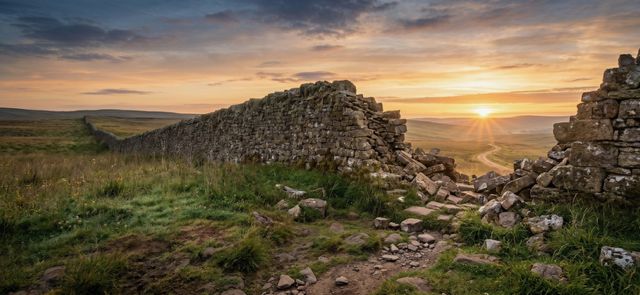
Has generational progress hit a wall? Will our children be better off than us?
For most of us, that was not a question. It was the quiet promise of modern life across generations.
Mindvista Edition 74 searches where that promise is fracturing across work, housing, wealth, and the confidence to imagine a better tomorrow.
Effort and agency matter, but they live inside conditions society creates. History from Song China and Abbasid Baghdad, and wisdom from Eastern and Western philosophy and traditions, have asked this question before in their own ways. They have left us something to learn from, for today and for the generations to come.
Do you believe your children will be better off ? Has the balance shifted between personal responsibility and the conditions that turn effort into progress? What can history and wisdom teach us about a better handoff between generations?
Love to hear your reactions and comments.