Human AI Allyship: For Individual Contributors, Managers, and Leaders To Do More and Be More
Being Human for a Better Tomorrow in the Age of AI
Thirty-three editions spanned work, life, and social good in the Age of AI; eight editions on Accelerated Innovation (AI with AI) explored how AI can drive new business in – Financial Services, Pharma, Healthcare, Enterprise Software, Physical AI, Retail, World of Art, Learning and Education; two editions were on the economics of AI – new business models and progress amidst tariff wars.; the impact of AI in common fundamental functions in three editions – Sales and Marketing, HR and Finance .
All of these are hinged on addressing divided opinions and deep concernsa about AI which we will explore in the next editions as we begin the run up to the 52nd anniversary edition:
Human AI collaboration to do more and be more
Human to Human connection and collaboration strengthened by AI
Changing face of innovation and adaptation in life with AI
Stepping up Institutional trust and AI security and ethical practices
State of the Art in AI Tech and Next
There is no going back. Engage and progress is the only way forward
Is AI Harmful or Helpful, A Negative or a Positive? The Great Divide
We live in a deeply divided world where experts and enthusiasts champion AI’s potential while the public harbors significant concerns.
This isn’t just anecdotal—the data tells a compelling story. A comprehensive poll conducted by Pew Research on “How US Public and AI Experts View Artificial Intelligence” reveals striking contrasts:
The constant headlines and drumbeat of new releases, performance improvements and overstated claims further fuels the divide. This perception gap creates real consequences: hesitation to adopt valuable tools, organisational resistance to transformation, and missed opportunities for genuine advancement.
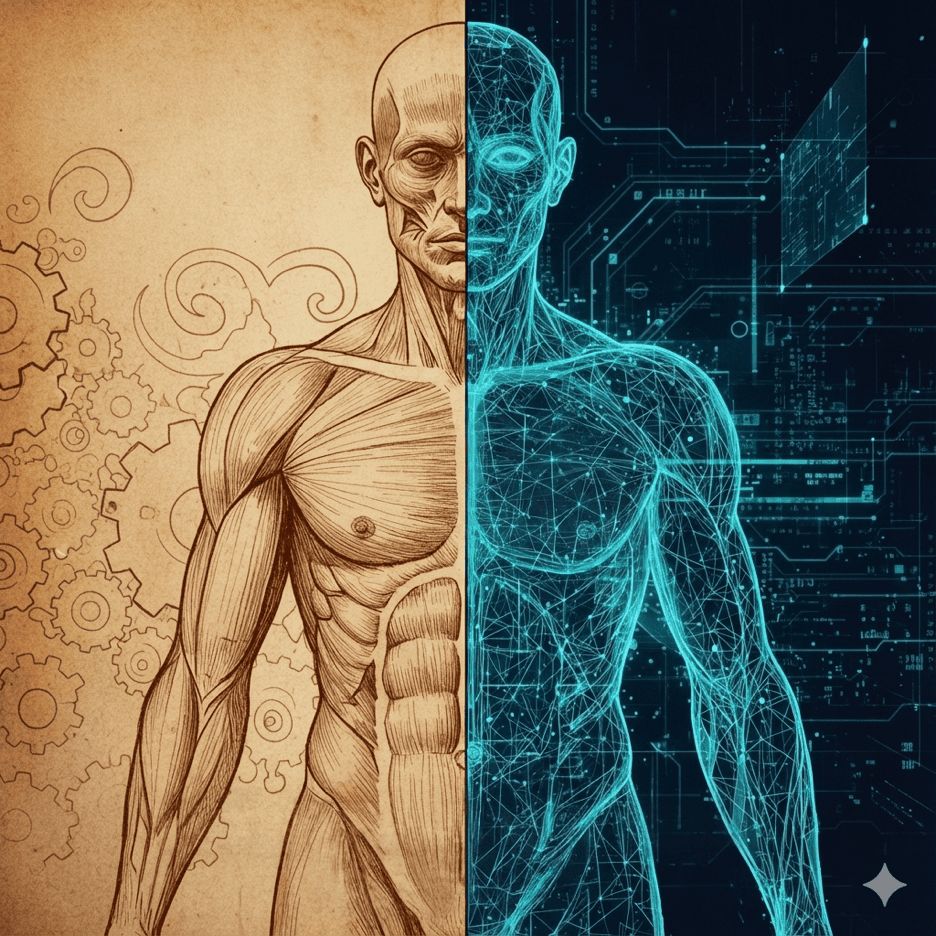
For me, my personal experience cuts through this noise. After integrating AI into my work, learning, research, and writing processes over the past year, I can unequivocally state that AI has been helpful, positive, and enabling. Ariavista (the AI assistant referenced in header image) has become my digital ally, expanding my capabilities and elevate than diminish my thinking and writing.
So no matter who says what, I encourage you to discard reflexive negativity and embrace Human-AI Allyship—one that nourishes what is deeply human while enabling us to do more and be more.
The Human Value Renaissance
As AI increasingly handles quantifiable, repetitive, and pattern-based tasks, we’re witnessing not just a redistribution of work but a fundamental elevation of human distinctiveness. The skills that make us uniquely human—creativity, emotional intelligence, ethical judgment, and contextual understanding—are becoming more valuable, not less.
This shift represents a genuine renaissance for human potential:
The question isn’t whether AI will replace humans, but how we can develop collaboration models that maximize the unique contributions of both.
Foundation of Human AI Allyship: Complementary Strengths
Effective allyship isn’t accidental—it’s built on understanding complementary capabilities, establishing appropriate trust, and creating conditions for successful Allyship.
Humans Excel In:
AI Excel In:
The most powerful outcomes emerge when these strengths are deliberately combined through thoughtful workflows and clear role definition.
Human AI Allyship Model: Do More, Be More Framework
AI empowers individuals at all levels to enhance their productivity (“Do More”) and elevate their focus to more human-centric, strategic, and fulfilling work (“Be More”).
Individual Contributors: Augmented Performers
AI acts as a performance equalizer and engagement driver, automating tasks and freeing ICs for creativity and complex problem-solving for use cases in research, writing, coding, customer service, ideation.
Individual Contributor (IC) — Author and Researcher (Mindvista)
Without AI
I previously read dozens of scattered sources—research papers, expert articles, social media posts, podcasts—while iterating alone through hunches, hypotheses, validation, and drafts. Collating and fact-checking references consumed hours; bandwidth limitations meant many promising ideas never made it to publication.
AI Help
IC Augmentation Principles Demonstrated:
Managers: Collapsing the Impossible Speed, Cost, Quality Triangle
Example: Global CPG Brand Manager
Without AI
Organized physical product photoshoots, required reshoots for every packaging change, briefed agencies for asset resizing across channels. Campaign timelines stretched 6-8 weeks, with budgets ballooning as variant requirements multiplied.
With AI (NVIDIA-powered digital twins & WPP Open pipeline)
Manager Doing The Impossible Principles Demonstrated:
Leaders: Accelerate Innovation Through Systemic AI Integration
As we saw in the Accelerated Innovation with AI across 8 industries, for leaders, AI provides unprecedented opportunities to reshape organizational capabilities and competitive positioning through strategic integration rather than tactical deployment.
Example: Shopify Leadership
Without AI
With AI (Sidekick assistant + AI Store Builder + CEO "AI-first" mandate)
Leadership Principles for AI with AI Demonstrated:
The Democratisation of Excellence: How AI Raises the Floor
One of the most profound yet underappreciated impacts of AI is how it democratizes capabilities that were once reserved for specialists or elite performers. This “floor-raising effect” transforms what we consider “average” performance across roles and functions.
The traditional performance curve in any domain typically follows a bell curve—a few low performers, many average performers, and a few exceptional standouts. AI partnership fundamentally reshapes this distribution by:
In practical terms, this means the “average” output in AI-augmented environments would have been considered exceptional in pre-AI contexts. Consider these examples:
This democratisation creates interesting dynamics:
For individuals at all levels, this means the baseline expectation for performance is rising. The good news? Your AI ally helps you meet these elevated standards while freeing you to focus on the areas where you can truly differentiate yourself.
AI as the Inner Watchman: Self-Intelligence Across All Roles
In our 30th edition, we transformed Bentham’s Panopticon—originally a prison design for surveillance—into the concept of an Inner Watchman for self-awareness and growth. This powerful metaphor takes on new dimensions in the context of Human-AI Allyship, as AI can serve as an objective, always-available companion in our journey of self-development.
While AI can serve as our Inner Watchman, helping us reflect and grow, it’s essential to recognize the fundamental capabilities that remain uniquely human—qualities that form the boundary of what AI can and cannot do in this partnership.
The Human Moat: What AI Can Never Be
Despite rapid advances, several fundamental aspects of humanity remain beyond AI’s reach.
These qualities aren’t just philosophical distinctions; they form a “moat” of capabilities that make human contribution irreplaceable in any effective partnership with AI.
The Path Forward: Intentional Allyship
As we’ve explored throughout this edition, effective Human-AI Allyship isn’t about technology adoption—it’s about intentional partnership.
By understanding the complementary strengths of humans and AI, we can design workflows that elevate our distinctly human capabilities while leveraging AI’s computational power. The most successful individuals, teams, and organizations in the coming years won’t be those who simply use AI tools, but those who deliberately define where humans add unique value and where AI can amplify that contribution.
The democratisation of excellence and the AI Inner Watchman represent just two of the powerful outcomes possible when we approach this partnership with clarity and purpose.
As we continue navigating this transformative era, our human moat—our consciousness, survival instinct, embodied intelligence, creativity, and proactive agency—remains our greatest asset, not in opposition to AI, but as the essential complement that makes the whole greater than the sum of its parts.
Human AI Allyship – what do you think? Do you have an AI ally? What has been your experience ?
As always, I welcome your comments, insights, and ideas.
There’s no going back, only forward. Let’s share what’s working and what’s not.
Explore, engage, share and stay tuned for more.
Best wishes
II. Questioning / Asking
Good conversations flow from well‑sequenced questions—topical, simple, coherent, cohesive.
LLM Conversation Example 1
Q: What are empirical judgments?
A: Empirical judgments are based on observation, experience, or experimentation.
Q: What are moral judgments?
A: Moral judgments are based on ethical principles and values.



Thanks for sharing. I read many of your blog posts, cool, your blog is very good.