Generic selectors
Exact matches only
Search in title
Search in content
Post Type Selectors

AI and Art: Good (Anyone Can Create), Bad (Impoverish Artists ) and Ugly (Dehumanizing Art). How Can We Find Joy and Also Make it Creator Worthy?

Being Human for a Better Tomorrow in the Age of AI

Innovation AI and Art Good Anyone Can Create Bad Impoverish Artists and Ugly Dehumanizing Art. How Can We Find Joy and Also Make it Creator Worthy

Media, Publishing and Entertainment: When AI Confronts Creativity

While our earlier editions focused on AIs potential to unlock new opportunities in various industries, the media, publishing, and entertainment sectors raise a deeper existential question: What happens when AI directly competes with human creativity itself?

This AI and Artistry dynamic creates unique tensions with the Good, Bad and Ugly sides side to it and challenges all to find, reward and sustain joy in art.

The Good: AI makes everyone an artist

“Go into the arts. I'm not kidding. The arts are not a way to make a living. They are a very human way of making life more bearable.”
— Kurt Vonnegut

Thanks to AI tools, the joy of writing, drawing, film and music making was impossible or which took years is now a days work or less. 

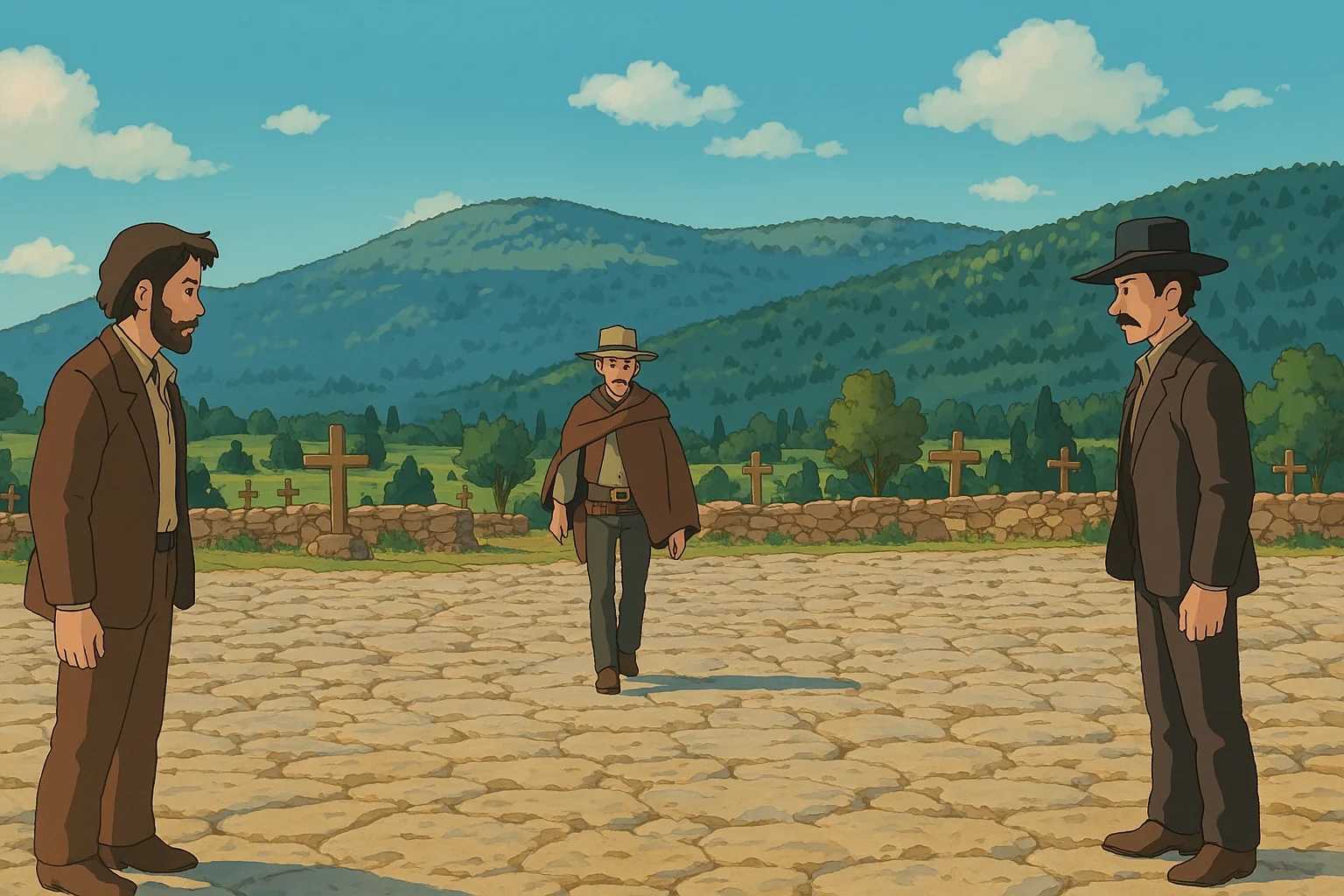
With credits and due apologies, the header image of this edition is an example, a confluence of film and animation made possible by AI. It reimagines the iconic cemetery scene from Sergio Leones The Good, the Bad and the Ugly in the style of Hayao Miyazakis Studio Ghibli, created using OpenAIs Sora Ghibli filter.

AI has dramatically lowered barriers to creative expression, enabling unprecedented access to tools once reserved for specialists:

1.Runway (Video Generation)

Runway has democratized video creation through its generative AI platform, allowing anyone to create professional-quality video content without specialized equipment or training. Their system enables users to generate, edit, and enhance videos using natural language prompts and reference images.

The company’s Gen-2 model can generate videos from text or image prompts, while their Erase and Replace feature allows automated content removal and substitution. This means non-specialists can now produce cinematic-quality videos that previously required expensive production teams.

2.Suno (Music Creation)

Suno has opened music creation to everyone by leveraging AI to generate professional-sounding songs from simple text prompts. Users can input a genre, mood, or even lyrics, and Sunos AI composes a full track—complete with vocals, instruments, and production—in minutes. The platforms intuitive design means no musical training is required, turning novices into songwriters. For example, a user can type upbeat pop song about summer love,” and Suno delivers a polished track ready for sharing. This accessibility has inspired a wave of amateur musicians to experiment with music creation, breaking down barriers once reserved for studio professionals.

The Bad: AI impoverishes Artists

AI-generated art does not compensate the artists well.

 “AI uses our past work to steal our future earnings. Its robbery wrapped in tech.” Justine Bateman, writer/director (on AI and writer compensation. 

“If AI is trained on human creativity without paying artists, you’re strip-mining culture for profit.” Neil Gaiman, author (on training AI with creatorswork without fair compensation):

A troubling aspect of AI in creative fields is its economic impact on creators and the extractive nature of many AI business models:

1.Getty Images vs. Stability AI

The ongoing legal battle between Getty Images and Stability AI exemplifies the economic conflicts emerging in the AI era. Getty alleges that Stability AI trained its models on millions of copyrighted images without permission or compensation, essentially extracting billions of dollars of creative value without reimbursing the original creators.

Court documents reveal that Stability AI’s training dataset contained approximately 12 million Getty-licensed images, representing work from over 150,000 photographers and the original creators have received no compensation for this use.

This case highlights the fundamental economic imbalance: AI companies can extract value from creative works at scale without compensating the creators, potentially undermining the economic foundation that sustains professional creative production. If AI can be trained on creative works without obligation to the creators, the financial incentives for original creation may collapse.

2.Musician Royalty Collapse

Musicians face growing economic pressure as AI-generated music expands in commercial use. Services like Suno, Udio, and Soundful produce professional-sounding tracks that mimic known artistsstyles, often royalty-free. A 2023 MIDiA Research report projects that AI could threaten up to 25% of musiciansrevenue by 2028 as businesses opt for these cost-effective alternatives (iMusician, 2023). Streaming platforms increasingly feature AI-generated mood” playlists, amassing millions of streams without paying human creators. A 2025 survey of independent musicians suggests that many are already feeling the impact, with over a third reporting income declines linked to AI competition (Musicians Union Survey, 2025). This trend risks eroding the financial stability of working musicians, who form the creative backbone of the music industry.

The Ugly: AI Dehumanizes Creation

For most creators AI dehumanizes and impoverishes originality, The concern and disgust about dehumanizing art is echoed across content genres. 

“Whoever creates this stuff has no idea what pain is or whatsoever. I am utterly disgusted. I strongly feel that this is an insult to life itself.” – Hayao Miyazaki the revered animator about AI

“Songs arise out of suffering… algorithms dont feel, data doesnt suffer.” – Nick Cave (responding to AI-generated songs mimicking his style):

 “Art is about imperfection. Algorithms seek to remove imperfections, but in doing so, they erase the human spirit.”- Guillermo del Toro author, film maker-

AI-driven creation threatens to standardize creative output, diminish human input , and create a troubling distance between creator and creation.

1.Sora’s Ghibli Filter (Image and Animation)

OpenAIs Sora made waves recently with the launch of its Ghibli filter, enabling users to transform any scene into a Studio Ghibli-style animation, but this innovation has sparked concerns about dehumanizing the art of animation. By simply prompting Sora with convert this video into a Ghibli-style scene,” users can generate a short clip featuring soft pastel landscapes, whimsical characters, and flowing movements reminiscent of classics like My Neighbor Totoro—a process that has gone viral, with over 500,000 clips shared on social media within the first 24 hours (X Trends, March 2025). Yet, these AI-generated animations often lack the emotional depth and hand-drawn authenticity that define Ghiblis legacy, reducing its distinctive style to a formulaic template. The filters reliance on algorithmic patterns risks eroding the human artistry that makes animation a deeply personal and expressive medium, turning a once-unique craft into a mass-produced, predictable output.

While being interesting ( this article header uses Ghibli filter from The Good, Bad and Ugly movies cemetery scene), they dont have the nuance that comes with painstaking craftsmanship.

2.AIVA and Classical Music (Music Composition)

AIVA, an AI designed to compose classical music, has gained traction in commercial settings by 2025, but its formulaic outputs highlight the dehumanizing impact of AI on a profoundly human art form. AIVA can generate a full orchestral piece in minutes—prompted by inputs like a dramatic symphony in the style of Tchaikovsky”—and its compositions have been used in over 3,000 projects, including film scores and advertisements, with its works officially recognized by SACEM, Frances music rights society, as the first AI to be credited as a composer (SACEM, 2020). Despite this milestone, AIVAs music often follows predictable patterns derived from historical data, producing technically sound but emotionally hollow pieces that lack the lived experience and creative spontaneity of human composers. This trend threatens to transform classical music into a sterile, machine-generated product, diminishing the raw emotional connection that has historically defined the genre and inspired generations of listeners.

Audience Disconnect

Consumers encountering AI-generated art, such as the viral Sora Ghibli filter clips, often express a sense of disconnection despite the visual appeal, underscoring the dehumanizing nature of such creations. On X, users have criticized these AI outputs, with one describing them as cheap slop” that turns Studio Ghiblis unique and pure art style” into something lazy, lamenting the loss of the painstaking work and craftsmanship” behind Miyazakis films (X Posts, March 2025).

A 2023 study further supports this sentiment, finding that people consistently rated AI-labeled artworks lower in profundity and worth compared to human-labeled ones, even when the art was identical, because they perceived AI art as lacking the human experience that evokes deeper emotional responses (Cognitive Research: Principles and Implications, 2023). This audience reaction highlights a growing awareness that AI art, while technically impressive, often fails to forge the meaningful connections that human art inspires.

See Sidebar 1 on why AI threatens creators adn Sidebar 2 on why the technology falls short for human creativity.

Finding Joy and Worth: Emerging Models and Solutions

AI has and can make Art possible for all humans. Yet creative recognition and compensation are major downside for original artists using AI. 

To be sensitive to concerns, initiatives are emerging that balance technological advancement with humans creative value:

1.Shutterstock’s Contributor AI Fund

Shutterstock has pioneered an ethical approach to AI image generation through its Contributor AI Fund, compensating creators whose work is used in AI training. The company allocates 15% of revenues from AI-generated content to contributors whose original work was part of the training dataset. Using blockchain to track attribution, the system ensures fair compensation when AI images draw on specific contributorsstyles. By May 2023, the fund had distributed approximately $4.24 million to contributors, with projections suggesting continued growth into 2025 (PetaPixel, 2023). This model fosters human-AI collaboration, ensuring creators benefit proportionally from the technologys success.

2.Spotify’s Creator AI Toolkit and Attribution Engine

Spotify has taken a balanced approach to AI in music with its Creator AI Toolkit and Attribution Engine, ensuring fairness for artists. The toolkit allows musicians to experiment with AI for tasks like generating backing tracks or remixing, while retaining creative control and copyright. Meanwhile, the Attribution Engine uses advanced audio fingerprinting to detect when AI-generated music borrows from existing works—such as a melody echoing a classic hit—and automatically routes royalties to the original artists.

AI and the Art Balanced Approach

These promising models share key characteristics that point toward sustainable solutions:

Explicit Attribution: Creating clear mechanisms to identify when AI builds upon human creative work.

Proportional Value Distribution: Ensuring economic benefits flow to all participants in the value chain, including original creators.

Creator Control: Allowing human creators to determine how and when AI tools are applied to their work.

Enhancement Over Replacement: Positioning AI as a creative partner rather than a substitute for human creativity.

Ecosystem Investment: Reinvesting AI revenues into developing new human creative talent.

These approaches suggest that AI and human creativity can coexist productively when business models are explicitly designed for mutual benefit rather than extraction.

AI Content and Law

The law is also divided on allowing original works in training and attribution of ownership.

United States:

In the U.S., the use of copyrighted materials for AI training is a subject of ongoing legal debate. A notable case is Thomson Reuters v. ROSS Intelligence, where a Delaware federal court ruled against ROSS Intelligence for using Westlaw’s copyrighted content to train its AI-driven legal research tool. The court determined that such use did not qualify as fair use under U.S. copyright law. In the NYT v. OpenAI/Microsoft case filed in December 2023, The New York Times alleges copyright infringement in the training of large language models, a case that could set important precedents for content used in AI training.

In the U.S., the copyright landscape for AI is still evolving. The U.S. Copyright Office issued guidance in March 2023 explicitly stating that AI-generated content without human authorship is not eligible for copyright protection. This was reinforced in February 2023 when they denied copyright registration for images in Zarya of the Dawn, a comic book containing AI-generated imagery, though they allowed registration for the text and arrangement created by the human author. 

United Kingdom:

The UK has adopted a more permissive stance. Current legislation allows the use of copyrighted works for data mining, including AI training, provided the use is for non-commercial purposes. This exception facilitates AI development by permitting the analysis of large datasets without infringing on copyright, though the scope is limited to non-commercial contexts.

Japan:

Japan has implemented a flexible approach to AI and copyright. The country’s copyright law permits the use of copyrighted materials for information analysis, which encompasses AI training, regardless of the purpose. This broad allowance aims to foster innovation in AI by enabling extensive use of existing works without necessitating individual permissions.

These varying legal positions reflect the global complexity surrounding AI training and copyright. As AI technology evolves, legal frameworks in different jurisdictions continue to adapt, balancing the promotion of innovation with the protection of intellectual property rights.

Takeaways for Artists and Businesses

AI is inevitable and yet it needs to work and find answers to these key questions:

Final Word

Unlike other industries where AI can create new opportunities , AI is also a threat in the world of Art. Integrating humanity and technology may be the biggest benefit and challenge we face in being human in the Age of AI.

AI in Art is inevitable but it also needs to preserve economic foundation, creative diversity, and human connection that make art meaningful while embracing the democratizing potential of new tools.

There is no precedence to follow and ultimately as creators, consumers and businesses we have to feel our way to what is a right equilibrium that would bring lasting joy, recognition and fairness to artists.

We should remember that today’s consumers will also become creators tomorrow.

Explore, join, and stay tuned for more

Love to hear your comments, thoughts, and ideas.

Best wishes,

Sidebar 1: Creator Voice

South African digital artist Roxane Lapa, with over 20 years of experience, has voiced deep concerns about AIs impact on her livelihood, reflecting the fears of many in the creative industry. In 2023, as AI art generators like DALL-E 2 began producing concepts in seconds—often in the exact styles of human artists—she predicted they would threaten portrait and concept artists, a fear that has since materialized. Were being stolen from and made obsolete by greedy organizations,” Lapa stated, highlighting how AI tools scrape billions of images without consent, directly competing with human creatives for jobs (Montreal AI Ethics Institute, 2023).

Her shift from design to digital art, hoping for a more secure creative career, now feels jeopardized as AI undermines the value of her painstakingly developed skills, echoing a broader anxiety among artists facing economic displacement.

Sidebar 2 Why AI is not a substitute for human creativity?

The mechanics behind AI-generated art reveal why it often feels dehumanized, as tools like Sora and AIVA rely on pattern recognition rather than true creativity. These systems use neural networks trained on vast datasets—Sora, for instance, was trained on millions of video frames, including Studio Ghibli archives, to identify and replicate visual patterns like soft color palettes and flowing movements (OpenAI Research, 2024).

When prompted, the AI stitches together these patterns to create new content, but it lacks the ability to infuse personal experience or emotional intent, resulting in outputs that feel formulaic. This process, while technically impressive, prioritizes predictability over the spontaneous, imperfect spark of human artistry, explaining why AI creations often fail to capture the depth that defines meaningful cultural works.

“AI is a language. Treat it like one: practice, iterate, and mind your grammar prompts, assumptions, and verification.”

II. Questioning / Asking

Good conversations flow from well‑sequenced questions—topical, simple, coherent, cohesive.
LLM Conversation Example 1
Q: What are empirical judgments?

A: Empirical judgments are based on observation, experience, or experimentation.
Q: What are moral judgments?

A: Moral judgments are based on ethical principles and values.

IV. Judgment

“The structure of a language affects its speakers’ worldview and cognition.”
— Henry Hazlitt
“The art of questioning is the source of all knowledge.”
— Thomas Berger
Share: